The printed paper
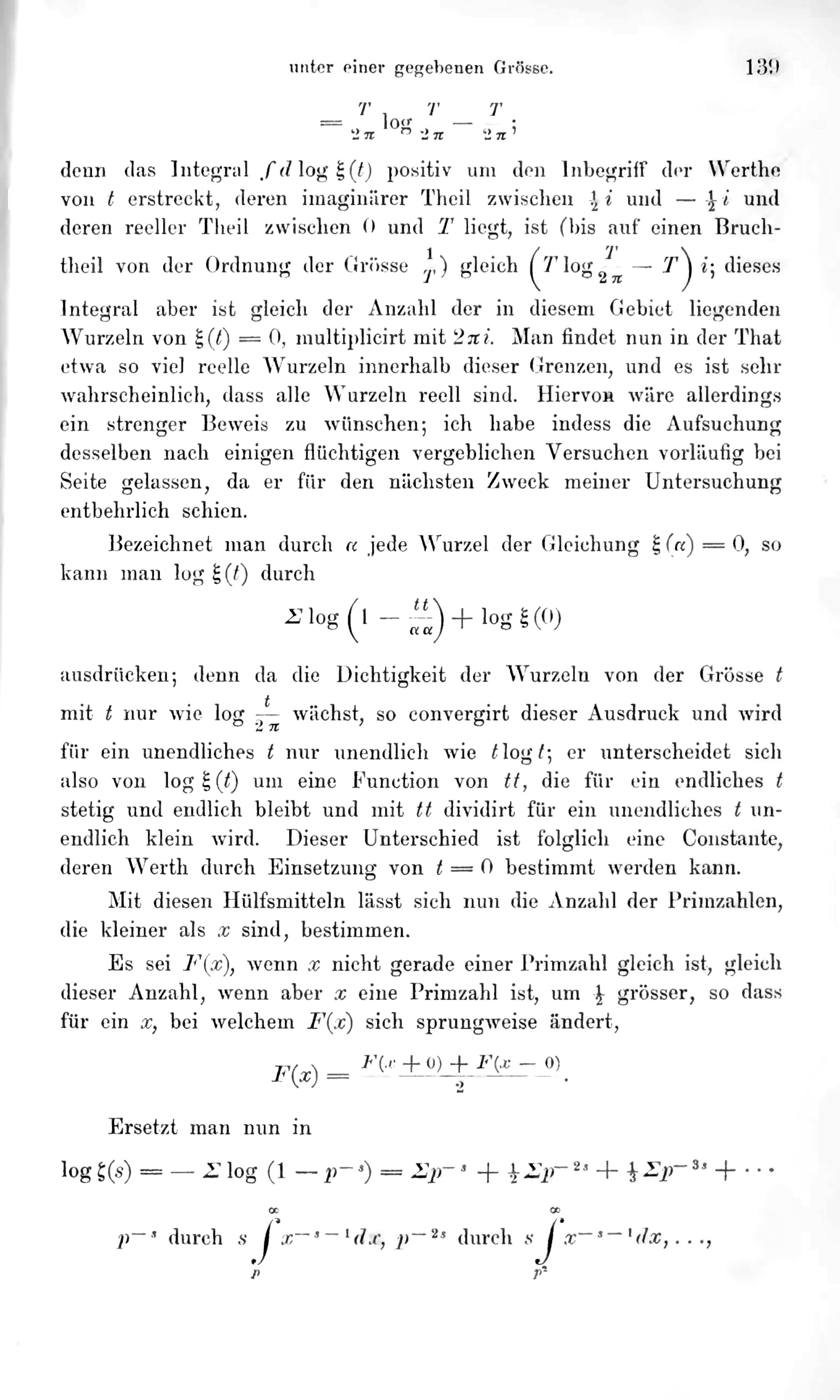
Ueber die Anzahl der Primzahlen unter einer gegebenen Grösse
Pick stop 1.3 to open the chart.
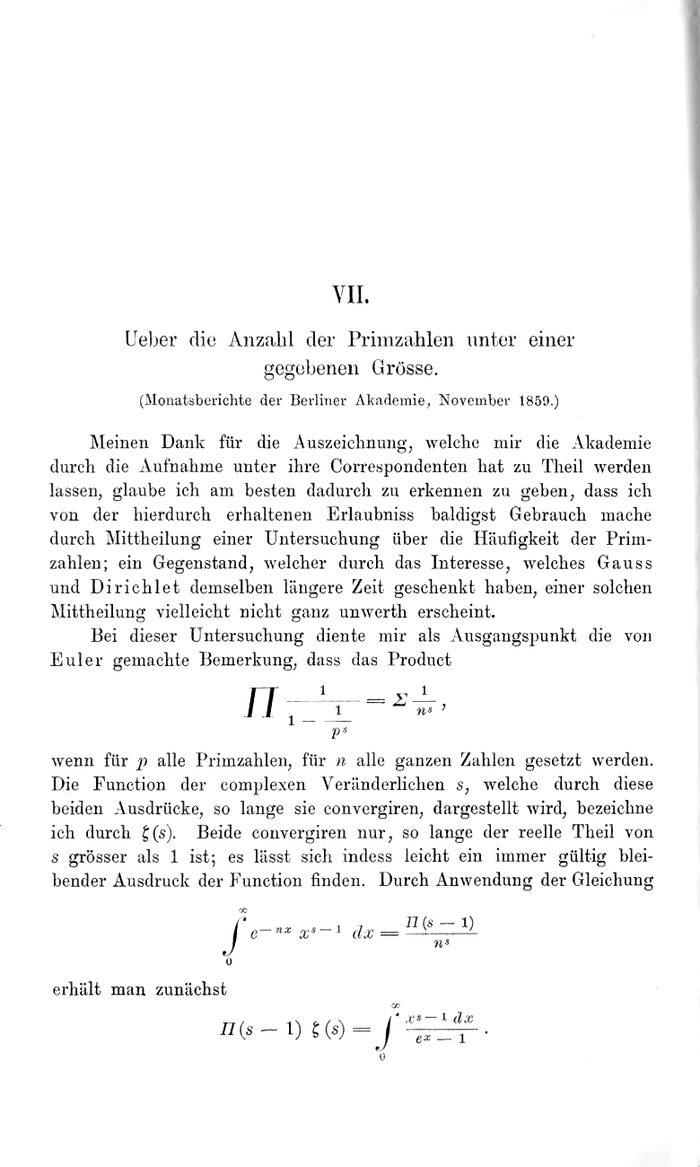
- Maker
- Bernhard Riemann
- Date
- November 1859
- First printed
- Monatsberichte der Berliner Akademie
- Length
- About six pages
Counting primes
Riemann was a theology student at Göttingen who turned to mathematics. In 1859 he sent the Berlin Academy a short paper on how many primes sit below a given size. It was his only paper on the subject.
One at a time, primes look random. Taken all together, they follow rules. Don Zagier said they “grow like weeds among the natural numbers” and also obey their laws “with almost military precision.”
Riemann found where the wobble comes from
Gauss's smooth curve gets the average right. Riemann tied the wobble around it to the zeros of his zeta function. The Clay Institute says: “The prime number theorem determines the average distribution of the primes. The Riemann hypothesis tells us about the deviation from the average.”
If the hypothesis holds, the staircase strays from the curve by about the square root of x, no more than random noise would. Bombieri wrote: “The failure of the Riemann hypothesis would create havoc in the distribution of prime numbers.”
There's more in the Run Data Run Deep Dive.